
A move typically involves an average of ten distinct administrative tasks, not to mention the physical logistics of boxes and transportation. Organizing a stress-free move requires handling these two aspects simultaneously, with a precise timeline. The ten tips that follow each address a specific point of friction, from the security deposit in shared housing to the local taxes of the new residence.
1. Activate bank mobility before changing residence
Few moving checklists mention bank mobility. The service is free: the new bank has regulated deadlines to retrieve information about recurring direct debits and transfers, and then notify the relevant organizations.
Starting this process several weeks before the big day avoids rejected direct debits on the old account. Health insurance, home insurance, energy subscriptions: all these payments transfer automatically once the mandate is signed.
2. Address the security deposit issue in shared housing
A departing roommate cannot directly request the return of their share of the security deposit from the landlord. They must reach an agreement with the remaining roommates. This financial blockage often occurs at the worst time, when the moving budget is already tight.
Who helps you anticipate this type of constraint when looking for a new home? Being able to move smoothly with Immo Radar also relies on the ability to identify these legal points before signing the lease.
The most common solution is for the new incoming roommate to take over the share with an amendment to the rental agreement.
3. Compare energy offers for the new home
The National Energy Mediator recommends comparing available offers before any move, in a context of constantly changing prices. Two scenarios arise:
- The home is already connected: contacting a supplier is sufficient for a quick service activation.
- The home requires a connection: the network manager (not the supplier) is the relevant contact, and the timelines are significantly longer.
- The meter has been cut off due to non-payment by the previous occupant: reactivation also goes through the network manager.
Not confusing these two contacts avoids weeks of waiting on moving day.
4. Check the school implications of changing municipalities
A child in kindergarten or elementary school may, in some cases, complete their schooling at their current school despite the move. The school change can be postponed until the start of first grade or the end of fifth grade, depending on the class attended.
This point often goes unnoticed by parents moving during the school year. Checking this possibility with the original town hall avoids a rushed registration and unnecessary stress for the child.
5. Anticipate waste collection and local taxes
The waste collection methods vary from one municipality to another. Some charge by weight or volume, while others apply a fixed fee. The housing tax on second homes and property tax follow different schedules depending on the local authorities.
Contacting the town hall of the new residence before the move allows you to know the collection days, the sorting system in place, and any tax-related procedures to complete in the weeks following your arrival.
6. Subscribe to a mail forwarding service
The Post Office offers a service for temporary or permanent mail forwarding to the new address. In practice, the subscription must occur at least a week before the move to be effective on the departure day.
This safety net covers forgotten mail during the address change: tax reminders, medical appointments, bank correspondence. The standard forwarding duration is six months, renewable.
7. Protect fragile items with suitable packaging
Bubble wrap, reinforced boxes, blankets: the packing materials directly affect the condition of the goods upon arrival. Disassembled furniture travels better than furniture left intact, provided that the screws are kept in labeled bags.
Each box should have a clear label indicating its contents and the destination room. This labeling speeds up unloading and avoids unnecessary openings on the first night.
8. Update the address with priority organizations
The address change is not limited to the Post Office. The organizations to notify in the first weeks include:
- The health insurance fund and the supplementary mutual insurance.
- The family allowance fund, especially in the case of housing assistance.
- The tax office, to avoid a tax notice sent to the old address.
- The home insurance, which must cover the new residence from day one.
The service-public.fr portal offers a grouped address change service that simplifies some of these procedures.
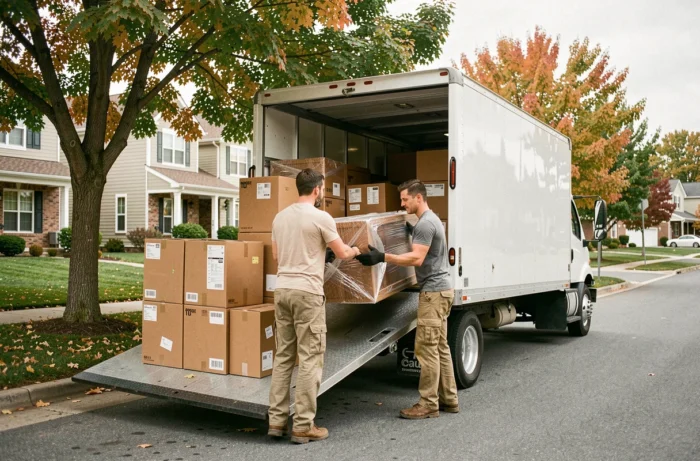
9. Organize the loading of the truck in reverse order of unloading
The principle is simple: the boxes unloaded first are loaded last. In practice, this means placing heavy furniture and boxes intended for the least urgent rooms (garage, basement) at the back of the truck.
Boxes labeled “kitchen” and “bathroom” are loaded last to be accessible immediately. This logic reduces handling time on arrival day and limits back-and-forth trips in a cluttered home.
10. Empty the refrigerator and freezer several days before departure
A full freezer requires several days for complete defrosting. Transporting it without this step causes water leaks in the truck and damages other boxes. Start emptying the freezer a week before the move to allow time to consume the stock without waste.
The refrigerator should be unplugged at least the day before, cleaned, and left with the door open to prevent mold during transport. This logistical detail avoids an unpleasant surprise upon moving in.
Every move combines administrative constraints (bank mobility, security deposit, local taxes) and physical constraints (packing, loading, defrosting). Handling administrative tasks in advance frees up bandwidth for logistics on the big day, where unforeseen issues tend to concentrate.