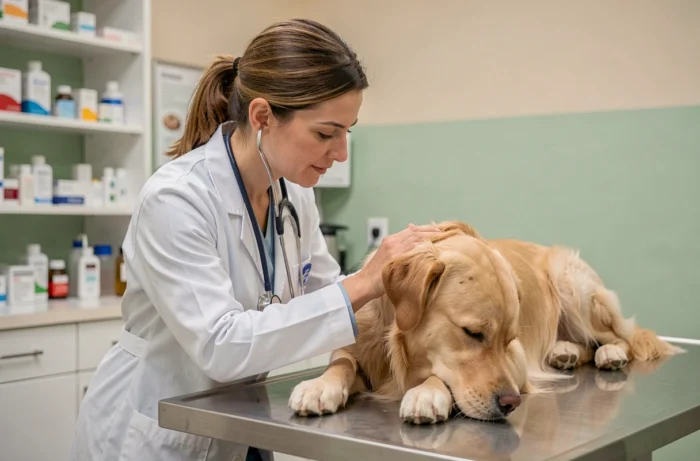
A dog that limps slightly after a walk, a cat that repeatedly licks a specific area of its body, a horse that suddenly refuses to turn right. These signals indicate discomfort that the owner perceives without always knowing how to respond. Several approaches to animal welfare care exist today, some traditional, others more recent, and they do not necessarily oppose each other.
Animal Osteopathy and Manual Therapies: What the Hands Detect
Animal osteopathy relies on palpation of the tissues to identify areas of tension, restricted mobility, or postural imbalance. The practitioner works on the joints, fascia, and sometimes the cranial structures of the animal.
In dogs, a typical consultation begins with observing the gait. The practitioner notes asymmetries, then methodically palpates the spine, pelvis, and limbs. The goal is to restore mobility without forcing the structures.
In horses, osteopathy often targets the consequences of poorly fitted equipment (saddle, bit) or repetitive work on the same foot. A horse that excessively hollows its back or drags a hind leg may present a sacroiliac blockage that manipulation seeks to relieve.
To explore the available care on Syntonie Animale, it is useful to understand how each method acts on different mechanisms of the animal’s body.
Osteopathy does not replace a traditional veterinary examination. It acts as a complement, especially when imaging tests reveal nothing abnormal but the animal continues to show discomfort.
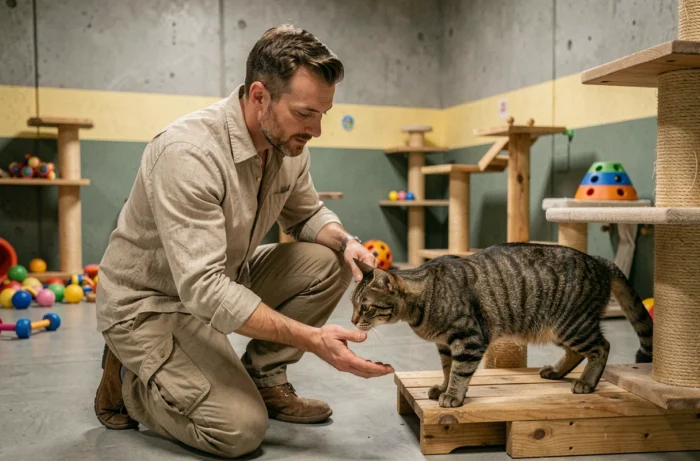
Energy Healing and Animal Mediation: Practices Based on Behavioral Observation
Have you ever noticed that an animal changes its behavior in the presence of certain people or in specific places? This sensitivity to the environment is at the heart of energy approaches applied to animals.
Energy healing works on the general state of the animal without direct physical manipulation. The practitioner places their hands near the body or on specific points, seeking to soothe a state of stress, agitation, or withdrawal.
These techniques do not claim to treat an identified pathology. They are aimed more at animals whose behavior has changed without an apparent medical cause: a dog that has become fearful after a move, a cat that no longer sleeps in its usual spots.
Animal Mediation, a Relational Approach
Animal mediation (sometimes called pet therapy) works in the opposite direction: it is the animal that participates in the care of a human. A trained dog intervenes in nursing homes, schools, or rehabilitation centers to facilitate social connections or stimulate motor skills.
The mediating animal must itself benefit from rigorous monitoring. Its well-being conditions the quality of the relationship it establishes with the people it supports. A tired, stressed, or physically uncomfortable animal cannot fulfill this role.
Nutrition and Daily Comfort: Often Underestimated Fundamentals
Before any complementary therapy, animal welfare depends on fundamental needs being properly met. Why this reminder? Because in practice, nutritional imbalances or an unsuitable environment explain a significant portion of behavioral disorders.
- A diet appropriate to the species, age, and activity level of the animal prevents many joint, skin, and digestive problems. A dog fed an excess of carbohydrates can develop chronic inflammations that even osteopathy will not resolve sustainably.
- The comfort of bedding directly influences muscle recovery. An older dog sleeping on a hard floor worsens its joint stiffness every night.
- The living space must allow the animal to express its natural behaviors: scratching, climbing, exploring, hiding. A cat confined in a studio without a scratching post or accessible height often develops anxiety disorders.
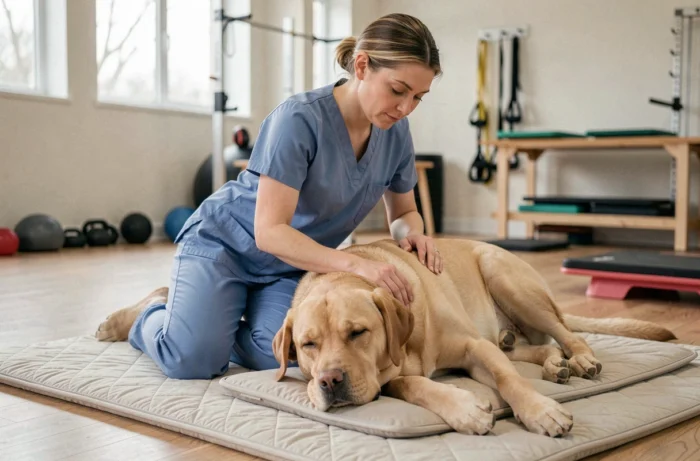
The Role of the Sensory Environment
Noise, light, and smells play a role that is often underestimated. A noisy kennel or a stable without proper ventilation generates chronic stress that weakens the animal’s immune system over the weeks.
Reducing sources of environmental stress can sometimes be as effective as targeted care. Changing the location of a litter box, soundproofing a resting area, or simply respecting natural light cycles can transform an animal’s behavior.
European Regulation and Animal Welfare: What is Changing Practically
The European Commission presented in December 2023 a proposal for a regulation specific to the welfare and traceability of dogs and cats. This text outlines common requirements for breeders, sellers, shelters, and online platforms.
Identification and traceability become central to this approach. The goal is to ensure that each animal can be tracked from its place of birth to its adoptive home, which limits trafficking and improves health monitoring.
In parallel, a project on animal transport introduces an approach based on vulnerability. Very young, unweaned, or pregnant animals would benefit from enhanced protections, with better consideration of weather conditions and loading density.
These regulatory developments do not directly concern practitioners in complementary care, but they outline a framework where the overall monitoring of the animal takes precedence over one-time interventions. A properly identified animal, with accessible history, benefits from more coherent care, regardless of the type of treatment chosen.
Approaches to animal welfare care are better combined than opposed. A traditional veterinary follow-up, complemented by appropriate manual or energy therapies and a daily environment designed for the animal, forms a more effective whole than a single method applied in isolation. The European regulatory framework is also pushing in this direction, structuring traceability and living conditions from the animal’s birth.