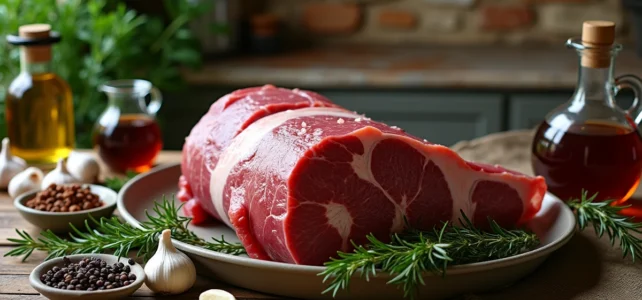
The hindquarter of deer is a piece of game meant for slow cooking, dense in muscle fibers and low in intramuscular fat. The marinade serves two technical purposes: to tenderize these tight fibers and to impart flavors that the meat, naturally low in marbling, does not develop on its own during cooking. Successfully completing this step determines the texture and taste of the final dish much more than the time spent in the oven.
Dry marinade or liquid marinade: two different approaches for the hindquarter
Before choosing ingredients, it is essential to understand the difference between these two approaches. A liquid marinade (red wine, vinegar, oil, herbs) acts by immersion: the acidity of the wine penetrates the surface fibers, softens them, and colors the meat. The liquid also carries the flavors of the spices and herbs across the entire surface of the hindquarter.
A dry marinade, sometimes called a “rub,” works differently. A mixture of ground spices, salt, and sometimes sugar is applied directly to the meat. The salt extracts moisture through osmosis, and then the meat reabsorbs this juice infused with flavors. This process, long reserved for pork or smoked beef cuts, has gained popularity with game in recent years with blends dedicated to deer (type “game rub”).
To adapt a deer marinade recipe to your hindquarter, the choice between these two methods depends on the desired outcome. The liquid marinade with red wine provides a pronounced flavor, a rich sauce, and a dark color. The dry marinade preserves the inherent taste of the venison more, with a shorter preparation time.
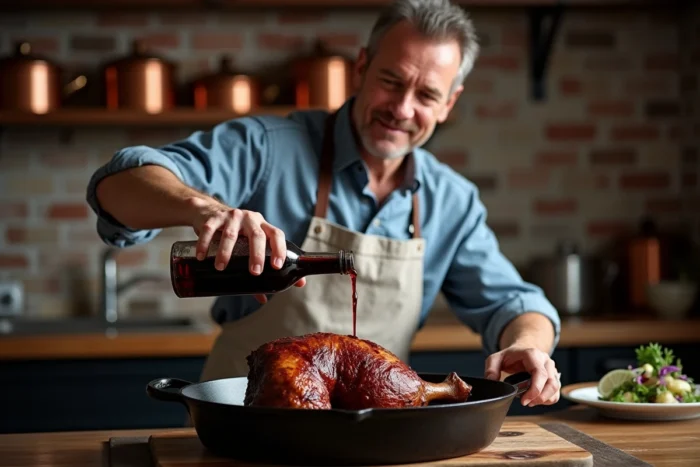
Composition of a red wine marinade for deer hindquarter
The classic red wine marinade remains the reference for a roasted hindquarter. Its effectiveness relies on a balance between acidity, fat, and herbs.
The liquid base
Red wine forms the body of the marinade. A full-bodied wine brings tannins that contribute to tenderizing the fibers. Olive oil creates a protective layer that prevents the meat from drying out during resting in the cold. Some recipes add a splash of brandy or cognac to enhance the aromatic depth without increasing the liquid volume.
The herbs and spices
The choice of herbs defines the flavor profile of the dish. Here are the elements that make up a balanced hindquarter marinade:
- Thyme, bay leaf, and rosemary form the classic aromatic base for game, with an earthy dominance that complements the venison.
- Juniper berries (slightly crushed) and cloves add resinous and spicy notes. Two to three berries are sufficient for a hindquarter; beyond that, the juniper becomes overpowering.
- Onion, carrot, and celery (mirepoix) serve as an aromatic base and will be reused for the deglazing sauce after cooking.
- Coarsely crushed black peppercorns release their aromas slowly during maceration.
Honey, added at the end of cooking rather than in the marinade, prevents the surface from caramelizing too early in the oven. Brushing the hindquarter with a honey-mustard mixture in the last half hour of cooking gives a consistent glaze without burning the sugars.
Marinade duration: why time changes everything
The duration of maceration radically alters the result. A marinade that is too short does not tenderize the deep fibers. A marinade that is too long disrupts the surface of the meat, making it mushy.
For a whole hindquarter (a thick piece), the classic range is around 24 hours in the refrigerator. This duration allows the herbs and the acidity of the wine to penetrate several millimeters.
The recent trend is towards shorter marinades with less alcohol. Cooking guides for leg and hindquarter of deer in the oven recommend light marinades based on olive oil, garlic, thyme, and rosemary, with only a little red wine or brandy, for durations of 6 to 12 hours. The goal is not to mask the natural delicacy of the deer meat under an overwhelming layer of wine.
This choice also depends on the age of the animal. A young deer, with already tender meat, does not tolerate a long maceration in acidic wine well. An older animal, with tougher fibers, benefits from a prolonged soak.
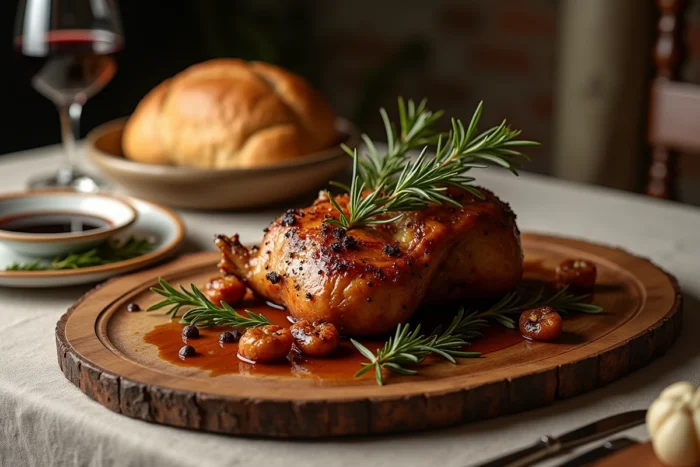
Cooking the hindquarter after marinating: mistakes that ruin the work
The marinade is useless if the cooking negates its effects. Two mistakes consistently occur.
Putting the cold hindquarter in the oven is the first. Taking the meat out of the refrigerator at least an hour before cooking allows for an even temperature rise. A frozen hindquarter in the center and hot on the surface cooks unevenly, resulting in a dry crust and a raw center.
The second mistake concerns the oven temperature. A roasted deer hindquarter requires an initial sear at high temperature to form a crust, followed by prolonged cooking at moderate heat. Regularly basting with the filtered marinade juice keeps the meat moist throughout the cooking time.
Recovering the marinade for the sauce
The maceration liquid, once filtered, forms the base of a complementary sauce. After removing the hindquarter from the roasting pan, deglaze with the reserved marinade, add the mirepoix vegetables, and reduce. This sauce concentrates all the flavors developed during maceration and binds the dish.
Some recipes enrich this reduction with a spoonful of currant jelly or honey to balance the bitterness of the reduced wine tannins. The result is a creamy game sauce that pairs well with root vegetables or celery puree.
The choice between a long red wine marinade and a short dry marinade depends on the desired flavor profile. The former yields a classic, dark dish with a rich sauce. The latter highlights the meat itself. In both cases, the roasted deer hindquarter benefits from being treated methodically rather than with an excess of ingredients.