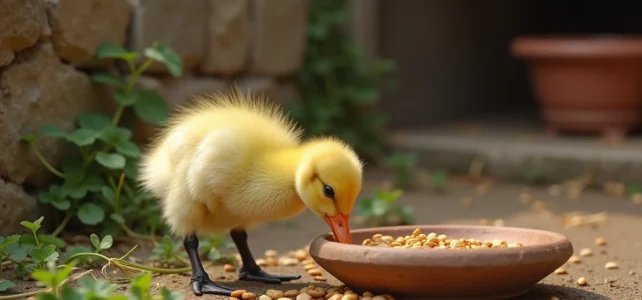
The gosling, from hatching, exhibits digestive and thermal fragility that conditions its survival during the first weeks. Unlike other poultry, the gosling is an early herbivore whose digestive system quickly adapts to plant consumption, which alters the feeding logic compared to chicken or duck chicks. Understanding these specificities helps avoid common mistakes, particularly regarding the type of grains provided or the management of access to water.
Angel Wing Syndrome in Goslings: An Underestimated Nutritional Risk
Angel wing syndrome is an irreversible deformation of the flight feathers, where the flight feathers grow outward instead of lying flat against the body. This condition is directly linked to an excessive intake of proteins or fast carbohydrates during the feather growth phase.
Bread, often given out of habit, is the primary culprit. It causes a nutritional imbalance that accelerates feather growth without the skeletal structure being able to keep up. Excess corn produces a comparable effect due to its energy density.
To delve deeper into this topic, the feeding of the gosling on Animalya details prevention protocols tailored to each growth stage. Once established, angel wing syndrome cannot be corrected, making nutritional prevention critical from the very first days.
Field reports vary on the exact protein threshold not to exceed, but the logic remains constant: a gosling primarily fed on grass and fresh vegetation, with a moderate grain supplement, presents an almost zero risk of developing this deformation.
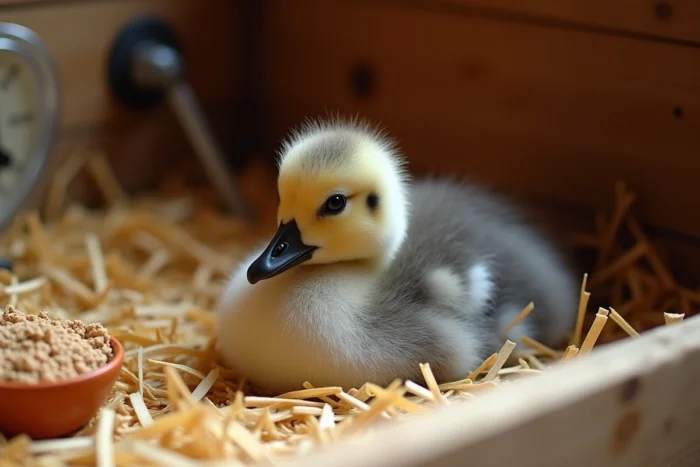
Feeding the Gosling Week by Week: From Start to Grazing
In the first days after hatching, the gosling consumes a starter feed for waterfowl, in the form of fine crumbs. Particle size matters: pellets that are too large can cause blockages in the crop. The feed must always be distributed moist to facilitate ingestion and limit waste.
First to Third Week
During this phase, the diet consists of a mixture of ground grains (wheat, oats) and finely chopped greens. Goslings begin to peck at grass from the very first days if conditions allow, but the grain supplement remains necessary to support growth.
Permanent access to clean water that is deep enough to immerse the head is a non-negotiable physiological condition. Geese, even young ones, must be able to rinse their nostrils to maintain proper respiratory hygiene. A simple chicken waterer is not sufficient.
From the Fourth Week Onward
The gosling gradually shifts to a diet dominated by grazing. If the terrain allows, fresh grass then becomes the basis of the diet. Grains become a supplement, distributed in the evening to compensate for the energy expenditure of the day.
- Fresh grass and clover as the daily food base, available ad libitum on a rotating pasture
- Cracked wheat or oats as an evening supplement, in reduced quantities compared to the first weeks
- Fresh vegetables (lettuce, endive, carrot tops) for diversity, without excess water-rich vegetables
- Fine gravel or coarse sand provided for gizzard function
The Canadian organic standard, in its consolidated edition, distinguishes true pastures (with living vegetation) from simple outdoor areas. For a farming practice that respects the development of the gosling, access to growing vegetation conditions the nutritional quality of the diet well beyond mere caloric intake.
Health Care for the Gosling: Temperature, Parasites, and Veterinary Visits
The thermoregulation of the gosling is immature at hatching. The temperature under the brooder starts around the adult body temperature and then gradually decreases each week. Observing behavior remains the best indicator: goslings huddled under the heat source signal a thermal deficit, while goslings scattered at the edges of the enclosure indicate overheating.
Parasite Management on Pasture
As soon as the goslings access grazing, rotating the pastures becomes a major health lever. A fixed pasture encourages the accumulation of intestinal parasites in the soil. Rotation, ideally every few weeks, breaks the parasitic cycle without systematically resorting to dewormers.
Continuous trampling on the same wet ground also causes foot pathologies (bumblefoot), common in young geese raised on compacted soil. Well-draining soil and dense vegetation cover limit this risk.

Veterinary Follow-Up and Biosecurity
Regular health visit protocols, including assessments of nutrition and biosecurity, also apply to small family farms. These visits allow for early detection of digestive or metabolic pathologies related to an inadequate diet.
- Check the condition of the plumage to spot any potential angel wing syndrome as soon as the flight feathers appear
- Monitor the consistency of the droppings, a direct indicator of digestion quality
- Track weekly weight gain to adjust the grain ration
Toxic Foods and Common Mistakes with Goslings
Some foods distributed out of ignorance cause rapid damage. Bread, already mentioned for angel wing syndrome, also leads to hepatic steatosis when given for prolonged periods. Raw potatoes contain solanine, which is toxic to waterfowl. Avocado, large quantities of citrus, and chocolate should also be avoided.
The most common mistake remains the overdosage of corn. Rich in energy but low in fiber, it disrupts the diet and promotes early fattening at the expense of bone and muscle development. Corn should never constitute the primary grain base for the gosling, but should remain a minor component of the mix.
Another frequent mistake concerns water. Providing water in a container that is too shallow deprives the gosling of its ability to immerse its head, leading to recurrent nasal and ocular infections. A container that allows for complete head immersion, without the gosling being able to drown, resolves this simple but often overlooked problem.
Ultimately, the success of raising goslings hinges on a few precise dietary choices and regular monitoring of behavior. A gosling that grazes actively, drinks freely, and has smooth plumage does not require much more.