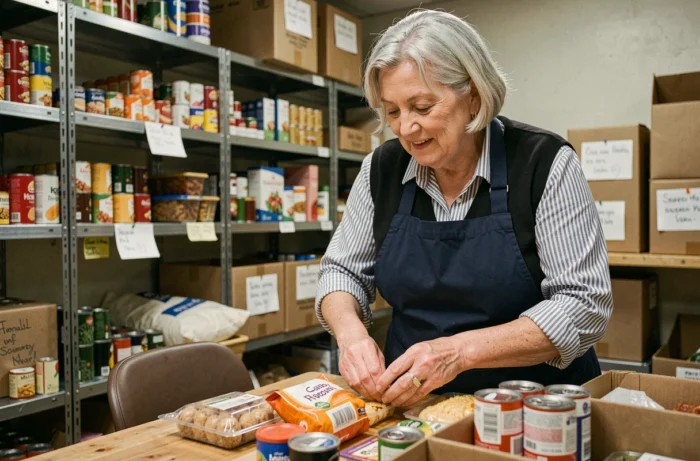
The volunteering of retirees in France does not follow the trajectory one might imagine. Despite the time freed up by the end of professional life, the volunteer engagement of those over 65 has been declining in recent years. Seniors represent about one-third of regular volunteers in associations, a figure that is stagnating or even decreasing. Understanding the forms of solidarity engagement after retirement first requires identifying what hinders or facilitates taking action.
Citizen Engagement Account and Training Rights for Volunteer Retirees
The Citizen Engagement Account (CEC) is a mechanism that is still poorly known among retirees. Its principle: converting hours of associative volunteering into training rights, recorded on the Personal Training Account (CPF).
This mechanism does not apply to all volunteers. To benefit from it, one must hold supervisory or responsible positions within a declared association of general interest and justify a minimum hourly volume over the year. The CEC thus targets a specific profile of seniors who are committed over the long term.
For retirees who wish to acquire new skills (digital, languages, project management), this lever allows them to finance training without tapping into their personal resources. Platforms like seniors-en-mission.org list associative missions compatible with this type of recognition.
The CEC illustrates an evolution in how France recognizes volunteering: no longer just as a free gift of time, but as an activity that carries concrete rights.
Short and Flexible Missions: What Seniors Are Looking for Today
The France Bénévolat barometer describes volunteering as becoming increasingly selective. Retirees no longer necessarily want to commit every week to the same association for years. Short and adaptable missions are more appealing than fixed responsibilities.
This trend has several origins. Young retirees travel, take care of their grandchildren, and engage in sports activities. Their schedules remain fragmented, and a rigid commitment competes with these other priorities.
Engagement Formats Adapted to Retirees
- Short missions during associative events (collections, outreach, food distribution) allow for contribution without a binding schedule
- Skills-based volunteering, where a retiree offers their professional expertise for a defined period, meets the need to feel useful without unlimited commitment
- Seasonal actions (academic support at the start of the school year, tax assistance in spring) provide a clear time frame with a start and an end
Associations struggling to recruit senior volunteers often offer permanent responsibility positions. Adapting the mission offerings to the reality of retirees’ available time remains an underutilized lever.
Intergenerational Engagement: When Seniors and Young Volunteers Collaborate
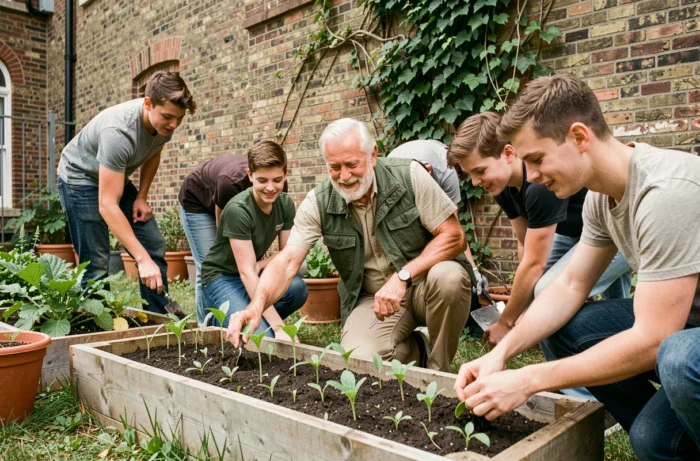
The solidarity engagement of seniors does not operate in isolation. The Civic Service Solidarity Seniors associates young volunteers with regular visits to isolated elderly individuals. This initiative creates a two-way relationship: young people break the isolation of seniors, and the accompanied seniors regain a structuring social link.
But intergenerational engagement also takes the reverse form. Retirees intervene in schools for mentoring, homework help, or the transmission of manual skills. These exchanges between generations produce measurable effects on the well-being of both parties, according to feedback from the associations that organize them.
Specific Barriers to Intergenerational Engagement
The difference in cultural codes and rhythms between a retiree and a young person in civic service can generate misunderstandings. Associations that successfully create these pairs invest in mutual training time before the mission starts.
The feeling of uselessness is another barrier. Some seniors hesitate to offer their skills, believing they are outdated. Organizations that explicitly value previous professional experience (management, accounting, craftsmanship, health) achieve better retention rates.
Work-Retirement Transition: Preparing for Engagement Before Departure
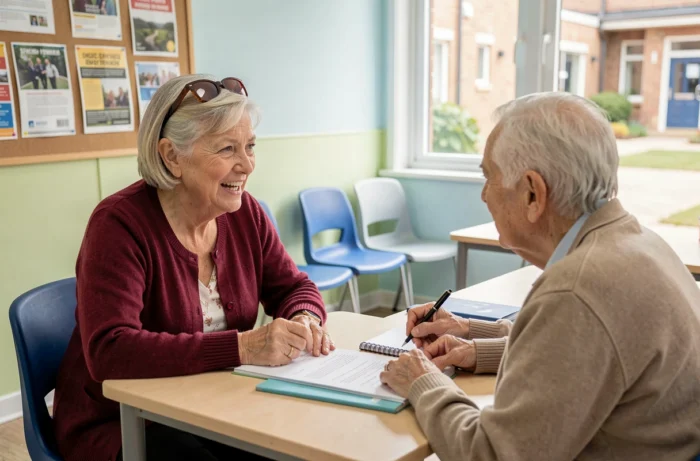
France Bénévolat distinguishes several types of transitions between professional life and volunteer engagement. The smoothest, termed transition by transposition, involves directly reinvesting one’s professional skills in an associative framework. A former accountant joins the treasury of a local association, a former teacher leads literacy workshops.
Conversely, some retirees experience what France Bénévolat calls an unassumed transition: the shift to retirement was not anticipated, the professional social network collapses, and volunteering appears as a stopgap rather than a choice. These situations often lead to rapid disengagement.
The determining factor remains preparation. Companies that incorporate a citizen engagement component into their end-of-career programs facilitate the transition. Employees who have already engaged in skills-based volunteering before retirement extend their commitment more often than those who discover the associative sector after leaving.
- Identify transferable skills to the associative world at least a year before retirement
- Test a first short mission during the last months of professional activity, if the employer allows
- Choose an area of action related to a personal conviction rather than just availability
A chosen and prepared engagement lasts longer than a default engagement. Retirees who lean towards solidarity missions that align with their professional background or deep interests maintain their involvement for several years. Volunteering after retirement works when it responds to a personal project, not when it fills a void.