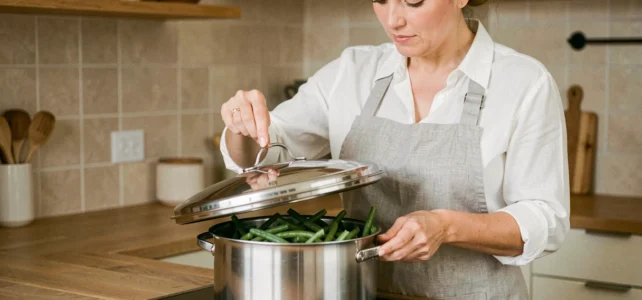
Reheating already cooked green beans in a pressure cooker raises a question of method more than difficulty. The main risk lies in the texture: a second exposure to heat can turn a still-firm vegetable into mush. Several techniques exist, with very different results on crunchiness, color, and final flavor.
Reheating green beans: comparison of methods and results
The choice of reheating method directly affects the texture and taste of cooked green beans. Here is a comparison of the three most common techniques.
| Method | Approximate Duration | Texture Achieved | Risk of Softening |
|---|---|---|---|
| Pan with a drizzle of oil | Few minutes over medium heat | Slightly golden, firm | Low |
| Gentle steam (basket or steamer) | Few minutes | Close to initial cooking | Moderate |
| Pot over low heat with a bit of water | Few minutes | Tender, uniform | High if too much water |
The pan offers the best control over the final texture. Dry heat allows residual moisture to evaporate instead of adding it, which limits softening.
Gentle steaming remains a good compromise for those who want to preserve the green color without fat. On the other hand, the pot with water exposes more to the risk of overcooking, especially if the amount of liquid exceeds a simple bottom layer.
One point to remember: never put the beans under pressure to reheat them. The pressure cooker has already softened the fibers during the first cooking. A second pressure build-up would destroy what remains of their structure.
To delve deeper into each technique, you can reheat green beans with Chapeau Melon, which details the steps and pitfalls to avoid.
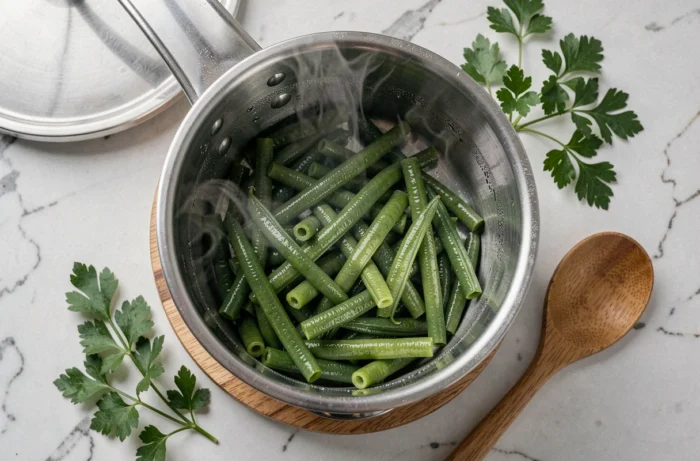
Residual moisture: the factor that degrades texture during reheating
Water is the real enemy of reheating. After cooking in a pressure cooker, green beans retain moisture in their fibers. If this water is not properly removed before storage, it will come out when heated and drown the vegetable in its own juice.
A careful draining immediately after cooking changes everything. Rinsing the beans under cold water immediately stops the residual cooking. Then they should be drained thoroughly, ideally on a clean cloth or paper towel, before placing them in the refrigerator in an airtight container.
When it comes time to reheat, this prior preparation results in beans that retain their firmness. In contrast, beans stored still damp in their cooking water lose their structure within minutes of reheating.
Storage before reheating: the important steps
- Cool the beans in cold water right after pressure cooking to set the color and stop the internal temperature rise.
- Drain on a clean cloth or paper towel, not just in a colander, to eliminate surface water.
- Store in an airtight container in the refrigerator, without adding liquid or sauce, to limit ambient moisture.
The shelf life in the refrigerator does not exceed two to three days. Beyond that, the texture degrades even with optimal storage, and the taste noticeably dulls.
Seasoning during reheating: why wait until the last moment
Salting green beans before storing them in the cold accelerates water loss through osmosis. Salt draws moisture out of plant cells, making the vegetable softer over time. The same phenomenon occurs with dressings or acidic sauces.
Adding salt, pepper, and herbs only at the time of reheating helps compensate for the loss of flavor related to storage without sacrificing firmness. A knob of butter or a drizzle of olive oil in the pan, a crushed garlic clove, a few fresh herbs: hot seasoning brings back depth to beans that may have lost intensity.
Reheating in the pan: the effective sequence
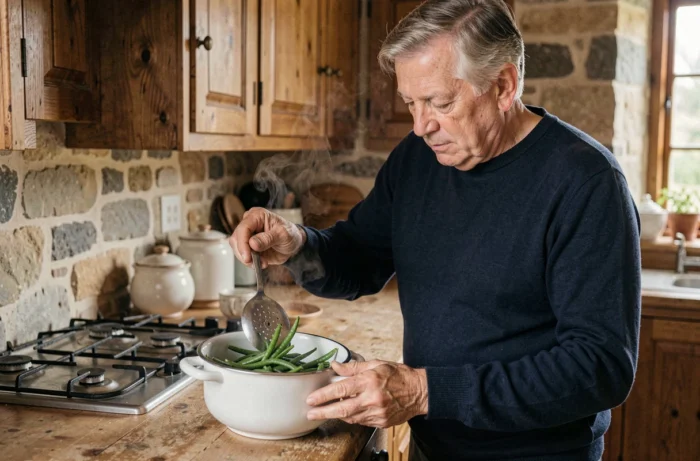
Heat the pan over medium heat before adding the fat. Place the drained beans in a single layer so that the heat circulates. Stir regularly for a few minutes, until the beans are heated through.
Salt at the end of reheating. Salt applied too early releases water into the pan and turns the sauté into a steam. With this method, the beans retain a slight crunch and even develop a hint of caramelization that enhances the flavor.
Reheating frozen green beans after pressure cooking: a special case
Freezing green beans already cooked in a pressure cooker is common in a batch cooking context. Freezing alters the cellular structure of the vegetable: ice crystals puncture the cell walls, making the bean more fragile during reheating.
To limit this effect, two precautions work well:
- Thaw slowly in the refrigerator rather than in the microwave to avoid thermal shock that accentuates softening.
- Then reheat in the pan over high heat for a short time to quickly evaporate the thawing water.
- Avoid the pot with added water, which combines the moisture from thawing and that from reheating.
A frozen green bean that is then reheated will never regain the texture of a fresh bean. Freezing imposes a compromise: the result remains acceptable for a warm salad, a gratin, or a mixed side dish, but not for a dish where crunchiness is expected.
Reheating cooked green beans in a pressure cooker relies on three variables: controlling moisture, choosing gentle or dry heat, and late seasoning. The pan remains the most reliable method to preserve what remains of firmness after pressure cooking. Proper storage, draining before reheating, and salting at the last moment: these simple steps make the difference between a pleasant vegetable and a green mush.