
Since the transition from Pôle emploi to France Travail, the obligations for job seekers have tightened. A decree that came into effect at the beginning of 2025 requires proof of at least three job search actions per month, with supporting evidence, during a check. In this context, knowing what to say to Pôle emploi during an interview or a phone call is less about tricks and more about methodical preparation.
Traceability of actions: what France Travail really expects
The most significant change in recent months does not concern the discourse held in front of the advisor, but the documentation that accompanies it. Recent guidelines no longer limit themselves to “having taken actions”: each action must specify the targeted employer, the date, the channel used (email, call, online application), and for phone contacts, the name and position of the person reached.
In practical terms, a job seeker who merely states “I sent CVs” without being able to show a structured history is at risk of being asked for additional proof, or even facing a sanction. The recommendation circulating in specialized guides is to create a dedicated monthly digital file (screenshots in PDF or JPEG), synchronized with the France Travail personal space.
Knowing what to say to Pôle emploi to be at ease therefore largely depends on the ability to produce this evidence quickly, even before the advisor requests it.
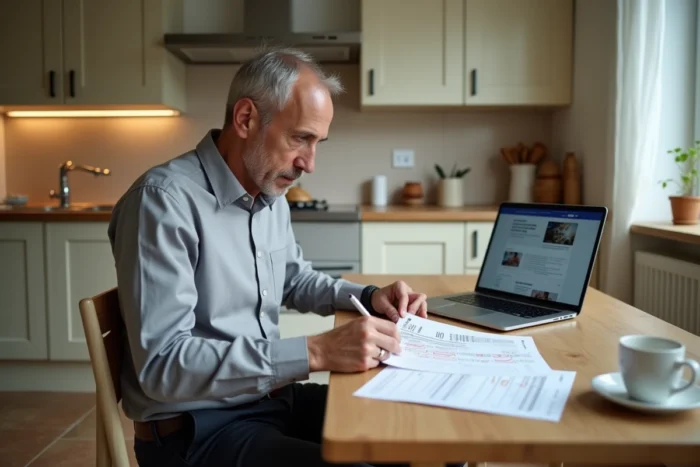
Interview with the France Travail advisor: mistakes that trigger a report
Job seeker forums are filled with testimonials about poorly prepared interviews. Three situations frequently arise and deserve to be detailed.
Inconsistency between the online profile and the verbal discourse
The advisor has access to your personal space before the interview. If your profile mentions a search in logistics but you state that you want to transition to communication, the discrepancy will be noted. France Travail explicitly recommends updating your profile before each appointment so that the displayed project matches the discourse held.
Salary expectations disconnected from the job market
Asking for a salary significantly higher than what is practiced locally for a given position can be interpreted as a deliberate barrier to returning to work. The advisor is not there to negotiate your salary, but they do note if your expectations are realistic in relation to the available offers in your geographical area.
Absence of a clear project (employment or training)
Arriving without a defined objective means leaving it to the advisor to frame your path, with the risk that they will direct you towards programs that do not suit you. A project formulated before the interview reduces the risks of misunderstanding and limits the prescriptions imposed.
France Travail sanctions: what really happens after an absence or refusal
The fear of being deregistered fuels many misconceptions. The actual framework of sanctions deserves to be clearly outlined.
- An unjustified absence from an appointment can lead to a temporary deregistration and the suspension of unemployment benefits for a variable duration depending on the recurrence.
- A refusal of a reasonable job offer (ORE) without a legitimate reason constitutes a breach that can trigger a warning, followed by a partial or total withdrawal of rights in case of repetition.
- A medical reason, a job interview, or an administrative summons are legitimate reasons for absence accepted by France Travail, provided that you notify in advance and provide proof.
The point that escapes many job seekers: the sanction procedure involves a contradictory exchange. Before any deregistration, France Travail must allow you to present your observations. Not responding to this letter or call amounts to accepting the sanction by default.
Monthly updates and the risk of overpayment: concrete pitfalls
The monthly update is when most errors occur. Forgetting to declare a few hours of work, even voluntary or temporary, can generate an overpayment that France Travail will claim several months later, sometimes with penalties.
Declaring every activity, even brief, at the time of the update is the only way to avoid this scenario. Field feedback shows that job seekers who contact their advisor by phone or through the personal space messaging as soon as a doubt arises are rarely sanctioned. The problem almost always comes from an omission not corrected in time.
In case of inability to attend an appointment, the safest approach remains to notify before the scheduled date, by phone or through the online space, specifying the reason. A request for rescheduling made in advance is generally accepted without consequences on rights.
- Notify at least 48 hours before the appointment, keeping a written record (message sent via the personal space or email).
- Attach proof if the reason is medical or related to a job interview.
- Check in the following days that the rescheduling has been properly recorded in the system, as technical bugs have been reported by several job seekers in 2026.
The relationship with France Travail relies on a documented exchange. Keeping a written record of each interaction protects both the job seeker and the advisor. The most frequent sanctions affect those who have nothing to show, not those who have made imperfect but traceable efforts.