
A fashion trend refers to a stylistic movement adopted by a growing number of people over a given period. It most often originates on the runways, but also, in recent years, directly on social media, in videos lasting just a few seconds. Spotting these trends requires knowing where to look, which tools to use, and, above all, how to distinguish a lasting signal from mere visual noise.
Micro-fashion trends on social media: a 72-hour cycle
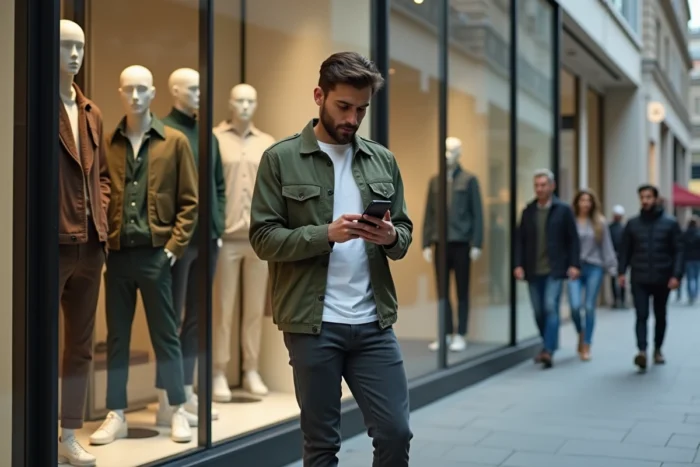
Magazines publish their trend reports each season. Social media, on the other hand, operates on much shorter cycles. Specialized fashion social listening tools, such as Syncly Social, Brandwatch, or Talkwalker, allow brands to capture weak signals in TikTok, Reels, and Shorts videos.
The challenge in 2026 is clear: some trends shift in less than 72 hours. A pattern, cut, or color appears in a handful of videos on Monday, shows up in a haul on Wednesday, and saturates the explore feeds by Friday.
For individuals, access to these professional platforms remains limited. The most direct method is to monitor a few fashion creator accounts on TikTok and Instagram, paying attention not to the pieces shown, but to the visual repetitions across multiple accounts simultaneously. When three independent creators wear the same silhouette in a week without coordinating, the signal is reliable.
Before diving into technical tools, it is possible to find trends on Mode in Paris thanks to already filtered and contextualized editorial monitoring.
Google Trends and fashion keywords: reading real demand
Social media shows what content creators are wearing. Google Trends shows what people are actually looking to buy. The difference is significant.
Typing “linen summer dress” or “trendy crossbody bags” into Google Trends allows you to visualize the search curve over the past months. A steady rise indicates a trend in the making. A sharp peak followed by a drop signals a fleeting craze, often linked to a single viral video.
What Google Trends reveals and what it masks
The tool provides a relative volume, not an absolute one. It compares terms against each other over a chosen period. For fashion, seasonal comparison is the most useful: observing whether “wide pants” surpasses “skinny jeans” in search volume year over year informs about underlying shifts.
However, Google Trends does not capture trends that have not yet been named. An emerging fashion style circulating on TikTok in videos without a specific keyword will remain invisible in the tool until it has been named by the community or the media.
Cross-referencing social media and search data provides the most comprehensive reading: the former detects the visual signal, while the latter confirms the demand.
Artificial intelligence and fast fashion: detection before magazines
Some fast fashion platforms are now systematically using AI to spot trends before traditional media. Shein, for example, combines data analysis and artificial intelligence to scan TikTok and Instagram in real-time, identifying emerging colors, patterns, and silhouettes, then launching very small batches to test demand before producing on a larger scale.
This test and scale logic means that the “New Arrivals” tabs of these platforms and the associated haul videos are often several weeks ahead of magazines and traditional trend sites.
Visual analysis tools accessible to professionals
Beyond fast fashion, solutions like Flaunt or Trendalytics offer automated visual analysis of fashion content published on social media. Flaunt, for instance, scans posts from creators and brands to extract recurring visual elements (cut, palette, type of piece) and provide actionable trend reports.
These tools remain geared towards professionals, with subscriptions intended for brands and buyers. For the general public, their interest mainly lies in the free reports or summaries published on LinkedIn and YouTube by the teams of these platforms.
Concrete method for spotting sustainable fashion trends
Following fashion without dedicating hours each week requires a minimal system. Here are the channels to combine, classified by type of signal detected:
- Runways and editorial reports (Vogue, Elle, Madame Figaro, FashionUnited): they set the major seasonal directions, color palettes, and reference silhouettes. Useful twice a year, during fashion weeks.
- Fashion creators on TikTok and Instagram (not brand accounts, but independent stylists and fashion videographers): they translate runway trends into wearable looks and signal pieces that are taking off in stores.
- Google Trends and search suggestions: they confirm or refute whether a visual trend translates into real purchase intent.
- “New Arrivals” tabs of fast-moving e-commerce platforms: they reflect, with a few days’ lead, what sales algorithms detect as rising demand.
The main trap is to confuse visibility with trend. A garment can saturate news feeds because it is worn by a celebrity at a unique event, without that turning into a movement. A trend is confirmed when it appears on at least two different channels within a few weeks.
The most effective fashion monitoring does not rely on the quantity of sources, but on their complementarity. A TikTok account captures the raw signal, an editorial article contextualizes it, and a Google Trends curve validates it. Three points of contact are enough to distinguish a real trend from a mere viral moment.