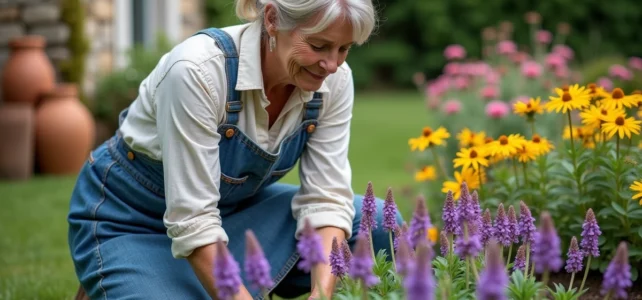
Perennials ordered online often arrive in pots or bare roots, in a state that surprises gardeners used to flowering potted plants from garden centers. Understanding this sales format, the acclimatization steps, and the actual quality criteria allows for a clear evaluation of an order, far from catalog photos.
Pot, bare roots, and clump: what a package of perennials really contains
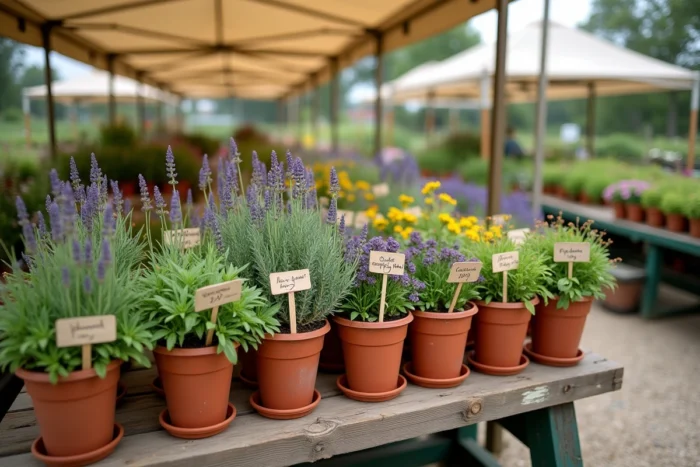
Most online nurseries, including Promesse de Fleurs, ship their perennials in three main formats. The 9 cm pot remains the most common: the plant develops a compact root system there, sometimes barely visible above the substrate. Bare roots mainly concern plants with fleshy crowns (daylilies, herbaceous peonies, hostas). Finally, some varieties travel in compressed clumps.
The common point between these formats: the plant does not resemble what it will become in the garden. A pot of perennial geranium delivered in March fits in the palm of your hand. Six months later, it easily covers half a square meter. This difference between the received plant and the expected result generates most of the disappointments expressed in online reviews.
Several field experiences emphasize a often overlooked point: success largely depends on the post-delivery stage. Shading the plants after delivery, watering immediately, and gradually introducing them to sunlight over several days are part of the actions that determine recovery, much more than the size of the plant upon receipt. A detailed article on the promise of perennial flowers specifically addresses these acclimatization conditions.
Plantfit and recovery guarantee: two tools from Promesse de Fleurs to know
Beyond the catalog, Promesse de Fleurs has developed a tool called Plantfit. The principle: a questionnaire that adapts plant recommendations to the geographical area, soil type, and gardener’s skill level. The result is not a simple filter by color or height, but a contextualized selection that takes local conditions into account.
The interest of this tool lies in its ability to avoid casting errors. Planting an acid-loving perennial in calcareous soil condemns the plant to struggle, regardless of its initial quality. Plantfit reduces this risk before placing the order.
Recovery guarantee: what it really covers
The page dedicated to the recovery guarantee from Promesse de Fleurs specifies a point that many gardeners are unaware of: the brand often asks to wait before concluding a failure. Some late-growing perennials (Japanese anemones, certain grasses) show no signs of life before May, or even June. Declaring the plant dead in April and requesting a refund would be premature.
In case of a manifest problem upon receipt (dried plant, rotted roots, breakage during transport), customer service intervenes. The brand’s logic is based on follow-up after receipt, not just on automatic replacement.
Assessing the quality of a perennial received by mail
The quality of a perennial plant is not judged by its foliage upon unboxing. Three technical criteria allow for a reliable evaluation:
- The root system: white or cream roots, firm, that fill the pot without spiraling tightly. A dense root hair indicates a plant in active growth.
- The collar: the area between roots and stems should be firm, with no signs of rot. A soft collar indicates excess moisture during transport or storage.
- The freshness of the substrate: the potting soil should be neither waterlogged nor completely dry. A pot that detaches as a compact block from the container shows correct rooting.
The foliage, however, may be damaged during transport without compromising recovery. A perennial with crumpled leaves but healthy roots will normally thrive after planting.
Conditions for recovery in the garden: soil, watering, and patience
In the first year after planting, a perennial invests its energy in rooting. Flowering remains modest, sometimes nonexistent. This normal behavior confuses gardeners who compare their plant to the visual in the catalog.
Three factors condition recovery:
- The preparation of the planting hole: a hole twice as wide as the pot, a loosened bottom, and the addition of mature compost mixed with the existing soil.
- Regular watering during the first six weeks, even for perennials known to be drought-resistant. A newly planted perennial is never water-independent before the second summer.
- Immediate mulching: it retains moisture, regulates soil temperature, and limits competition from weeds during the establishment phase.
Promesse de Fleurs structures its production on about 3 hectares of nursery and several thousand square meters of greenhouses, near Lille. Plants grown in northern France generally cope well with the climatic conditions of most of the territory. Mediterranean perennials, on the other hand, require special attention to drainage in regions with wet winters.
Online perennials or garden center: what really changes
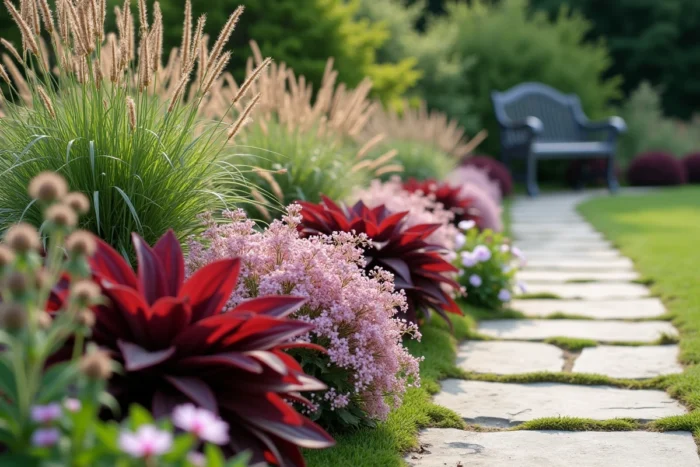
In garden centers, customers choose a plant that is already flowering, often grown in heated greenhouses to accelerate blooming. The visual effect is immediate. The downside: these plants are sometimes artificially pushed, with an insufficient root system to establish themselves in the ground.
A perennial ordered online arrives in a more natural growth stage. The pot is modest, the foliage sometimes sparse, but the ratio between the root mass and the aerial part is generally more balanced. A plain plant upon receipt often establishes better than a force-flowered plant.
The other difference lies in the variety diversity. Physical garden centers offer a few dozen common perennials. Online catalogs like that of Promesse de Fleurs list thousands of varieties, opening access to rare or recent plants absent from traditional circuits.
The choice between the two channels depends on the relationship to time. Those who want a visible result on the same day will prefer the garden center. Those who are willing to wait a season to obtain a better-rooted and potentially more durable plant will find satisfaction in online ordering, provided they master the acclimatization actions upon receipt of the package.