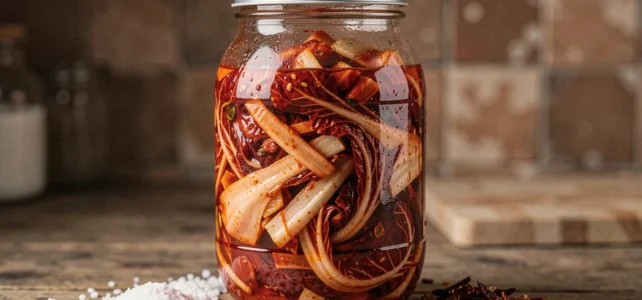
Kimchi is among the most consumed fermented foods in the world, and its growing popularity in Europe raises legitimate questions about its safety. The word “botulism” frequently appears in searches related to this Korean condiment. The risk exists, but it is not where most articles place it: the distinction between commercial kimchi and homemade kimchi radically changes the danger profile.
pH, a true line of defense against botulinum toxin in kimchi
Competitors on this topic extensively detail the symptoms of botulism or the general rules for sterilizing preserves. They rarely address the precise mechanism that makes kimchi different from a classic preserve: lactic fermentation.
When kimchi ferments properly, lactic acid bacteria (primarily Lactobacillus) convert the sugars present in cabbage and vegetables into lactic acid. This gradual acidification lowers the pH of the mixture. The critical threshold documented by food safety authorities is at a pH of 4.6. Below this value, Clostridium botulinum spores can no longer germinate or produce toxin.
A well-made kimchi reaches a pH significantly lower than this threshold, often around 4.0 or even less. It is this acidity that constitutes the safety barrier, much more than salt or storage temperature taken in isolation. When questioning the health risks of kimchi, it is therefore the issue of pH that deserves primary attention.
The problem arises when fermentation does not start correctly or is interrupted. In this case, the environment remains in a neutral pH zone while being anaerobic (deprived of oxygen) – exactly the conditions that Clostridium botulinum exploits to proliferate.
Commercial kimchi and homemade kimchi: two distinct levels of risk
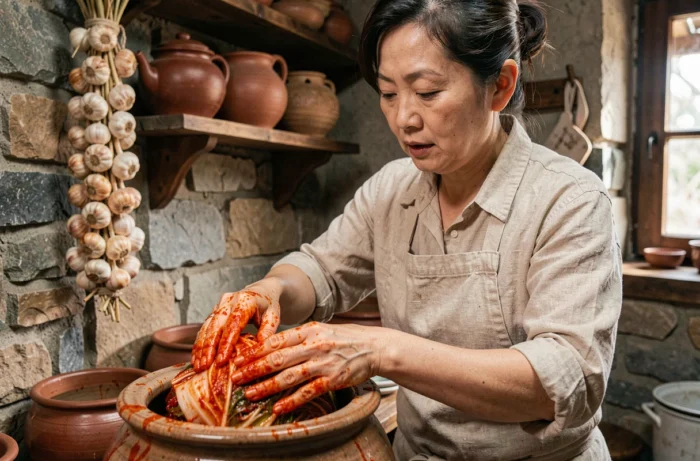
Industrial and artisanal producers who market kimchi operate within a precise regulatory framework. They monitor the pH with each batch, adhere to strict hygiene protocols, and maintain a documented cold chain. The risk of botulism with properly made commercial kimchi is extremely low.
The situation differs for homemade preparations. Several factors can prevent sufficient acidification of homemade kimchi:
- A salt ratio that is too low or too high, disrupting the natural selection of lactic acid bacteria in favor of other microorganisms
- Poorly washed vegetables introducing a competing bacterial load that slows down lactic fermentation
- Storage at too high a temperature in the early hours, promoting undesirable fermentations before acidity reaches a protective level
- A poorly sealed container or, conversely, an airtight seal without allowing fermentation time to establish, creating an anaerobic environment without the protection of lactic acid
Health authorities, including the government of Quebec, classify homemade fermented vegetables among products that can meet the conditions for botulinum toxin production when the process is poorly controlled.
Bloating, sodium, and histamine: common dangers of kimchi
Botulism grabs attention due to its severity, but the most common health issues related to kimchi are much more mundane. They affect a much larger proportion of consumers.
Digestive disorders related to fermentation
Kimchi contains significant amounts of probiotics and fiber. For those who do not consume them regularly, the sudden introduction of these elements often causes bloating, gas, and intestinal discomfort. These symptoms are generally transient and decrease with gradual consumption.
People suffering from irritable bowel syndrome may see their symptoms worsen, as kimchi contains fermentable FODMAPs (notably fructans from cabbage and garlic).
Sodium load
Salt is a structural ingredient in kimchi: it initiates the fermentation process by dehydrating the vegetables and selecting lactic acid bacteria. The sodium content of a serving of kimchi is significant, which raises concerns for those on a low-sodium diet or suffering from hypertension.
Histamine and biogenic amines
All fermented foods produce biogenic amines, including histamine. In individuals with histamine intolerance (DAO enzyme deficiency), kimchi can trigger headaches, skin flushes, or digestive disorders without fermentation being the cause. The product is “healthy” microbiologically, but unsuitable for their metabolism.
Preparing homemade kimchi without the risk of botulism
Homemade kimchi is not dangerous by nature. The lactic fermentation process is ancient, robust, and well-documented. Incidents occur when steps are neglected or improvised.
Three parameters determine the safety of the preparation:
- The initial salting must be sufficient to inhibit pathogens during the latency phase, before lactic acid bacteria take over. Most traditional Korean recipes use a calibrated proportion that has proven itself over centuries of practice
- The fermentation temperature must remain within a range that favors Lactobacillus. A cool room (around low room temperature) works better than a warm environment where undesirable bacteria can dominate
- Visual and olfactory control remains a reliable indicator: properly fermenting kimchi produces bubbles, emits a characteristic sour smell, and changes texture. The complete absence of signs of fermentation after several days is a warning signal
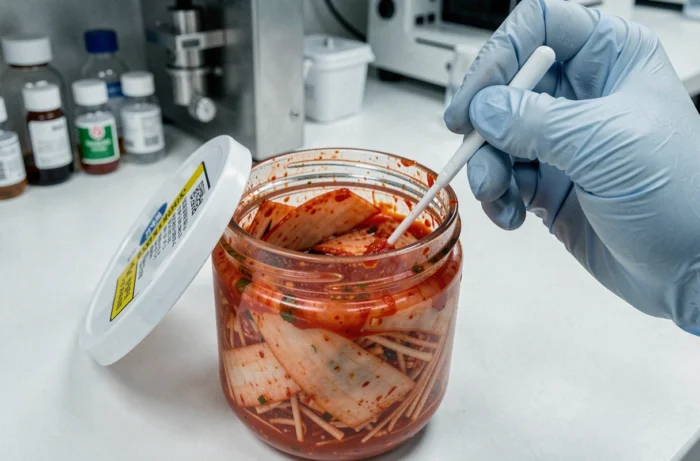
For those seeking objective verification, food pH strips can confirm that the environment has dropped below the 4.6 threshold. This simple test eliminates most of the doubt.
Kimchi remains one of the safest fermented foods to prepare at home, provided that salting, utensil cleanliness, and allowing lactic fermentation to do its work until sufficient acidity is achieved are respected. The real dangers for most consumers are more related to individual digestive tolerance and sodium load than to a serious infectious risk.