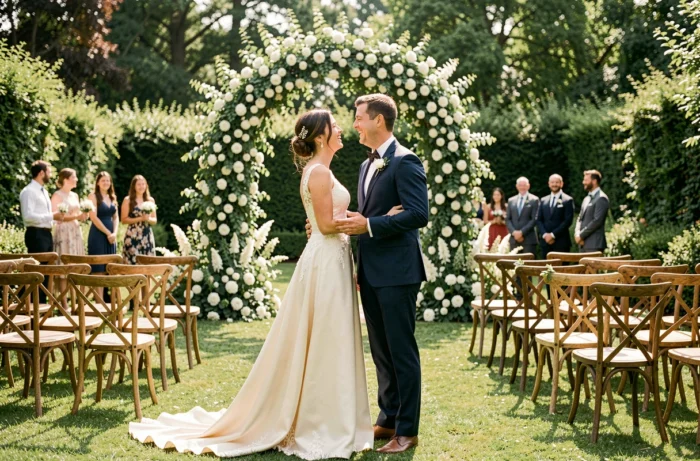
The average French wedding costs around 20,000 euros for about a hundred guests, which is approximately 205 euros per person according to data from Mariages.net. This per capita ratio is the true indicator for managing a wedding budget, much more reliable than the overall ranges that can vary by more than 40% from one source to another. Organizing the wedding of your dreams starts with mastering this unit cost, not by choosing a color palette.
Cost per guest and budgetary trade-offs: the variable part of the wedding
The variable part of a wedding, including meals, drinks, and furniture rental, ranges from 80 to 150 euros per person. This is where the real flexibility lies.
Reducing the guest list by twenty people frees up enough budget to upgrade the caterer or hire a more experienced photographer. We recommend finalizing the number of guests before any negotiations with vendors, as each additional guest impacts four to five expense categories simultaneously.
Couples who organize their reception on weekdays or during the off-season obtain significantly lower rates for venue rental and catering. This lever remains underutilized, even though it allows for maintaining a high level of service without inflating the overall budget. Vendors available during these off-peak times are often the same as those on Saturdays in peak season, but with a different pricing structure.
To compare offers from specialized vendors, a useful resource is: https://www.espace-mariage.fr/, which groups wedding professionals by category and region.
Themed wedding and off-peak date: the new norm for an unforgettable day
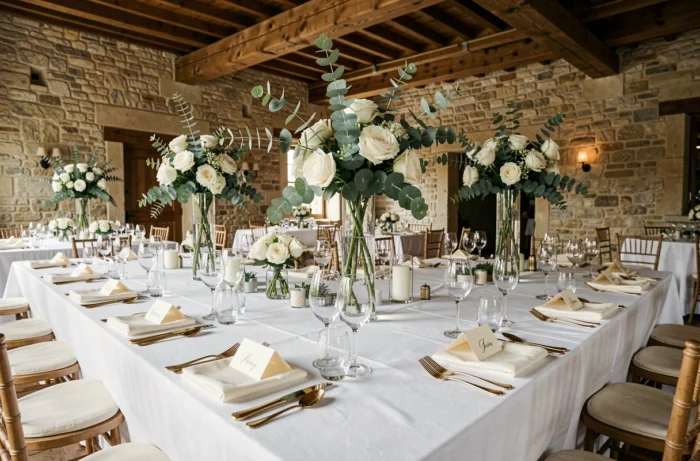
The dream wedding in 2026 no longer resembles that of ten years ago. The dominant trend combines a strong theme with an off-peak date to remain financially viable while creating a memorable experience.
A theme is not just an artistic direction. It structures the choice of venue, dress code, menu, music, and even the format of the ceremony. A “Provençal guinguette” wedding in October does not have the same logistical constraints as an “industrial loft” wedding in January, and both cost significantly less than a classic reception on a June Saturday.
We observe that couples who choose a specific theme make their decisions faster. The theme acts as a filter: each vendor, each decorative element, each detail either passes or fails the consistency test. This reduces the number of quotes requested and the negotiation time.
Structuring the theme around three pillars
- The venue dictates the ambiance. A vineyard, a botanical garden, or an urban event space each carries a visual universe that reduces the need for heavy and costly decoration.
- The meal reflects the theme. A seated country buffet does not cost the same as a gourmet dinner served at the table, and both can achieve an equivalent quality level if the caterer is chosen for their specialty.
- The entertainment creates the memory. A gypsy jazz band, a cocktail workshop, or an outdoor film screening leaves a stronger impression on guests than a generalist DJ, often for a comparable budget.
Wedding timeline: milestones that classic guides underestimate
The majority of wedding timelines available online list tasks month by month without prioritizing their impact. Three decisions made in the first eight weeks determine everything else: the venue, the caterer, and the photographer-videographer.
These three vendors are the ones whose schedules fill up the fastest and whose choices constrain subsequent options. A venue imposes capacity, table style, and logistical access. The caterer determines the meal format and the duration of the cocktail. The photographer influences the timing of the day, as the best natural light conditions cannot be negotiated.
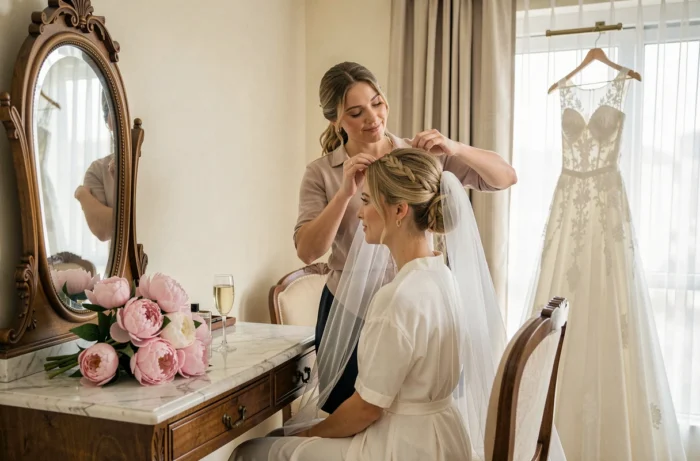
Key areas to secure after the venue-caterer-photographer trio
Once these three pillars are set, the next trade-offs involve floral decoration, stationery (invitations, menus, seating plan), and day-of coordination. We recommend not signing with a florist before finalizing the seating plan: the floral volume directly depends on the table configuration.
The day-of coordinator deserves special mention. This role, distinct from the wedding planner who intervenes over several months, involves managing logistics on the actual day. For couples organizing their wedding without a planner, this vendor alone can transform the flow of the day. Their cost represents a fraction of the overall budget, but their impact on the couple’s peace of mind is disproportionate.
Ecological footprint and responsible wedding: a structuring criterion
Organizing a wedding in 2026 increasingly incorporates environmental considerations as a decision parameter, not as an optional extra. Fewer guests, more time together, more attention to the ecological footprint: this triple evolution redefines the format of celebrations.
Reducing food waste involves choosing a formula suited to the actual number of guests. A buffet statistically generates more waste than a plated meal when the number of servings is poorly calibrated. Asking the caterer for their average loss data by formula allows for objective comparison.
Choosing local vendors reduces transportation distances and reinforces the coherence of a wedding rooted in a territory. A florist who works with local producers offers fresher seasonal arrangements, often at lower costs, and with measurable carbon impact.
- Favoring reusable dishware over disposable, including for the cocktail, significantly reduces waste volume.
- Opting for digital invitations or those printed on recycled paper decreases the stationery budget without sacrificing aesthetics.
- Organizing carpooling for guests via a shared management tool avoids the multiplication of vehicles on sometimes narrow roads around the venue.
The dream wedding is no longer defined by the number of guests or the amount of the bill. The structural trend points towards more intimate, personalized celebrations, where every euro spent serves a specific intention. It is this coherence between budget, theme, and values that creates a truly memorable day.