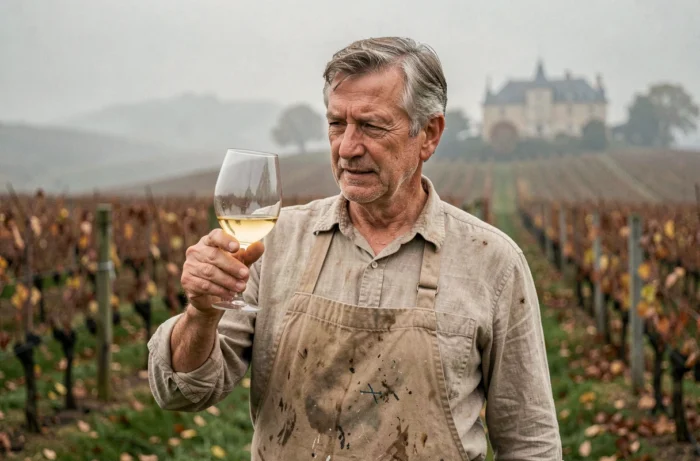
What factors truly distinguish a great Loire wine from a good Loire wine? The answer lies as much in the soils as in the grape varieties, but also in recent dynamics that the labels do not tell. On the 42,000 hectares of the Val de Loire vineyard, historical winemaking benchmarks are shifting, along with the aromatic profile of the bottles that arrive on tables.
Chenin, Sauvignon, Cabernet Franc: What the Loire soils do to the grape varieties
Competitors talk a lot about the appellations. Less about the soil-grape interactions that explain why a Chenin Blanc from Vouvray does not resemble a Chenin from Anjou, even though the grape variety is the same.
The tuffeau, this soft limestone rock that characterizes Touraine, imposes a natural drainage that forces the vine to draw deeply. The Chenin Blanc develops a mineral tension and a capacity for aging that the schist soils of Anjou do not produce in the same way. In Anjou, the schist retains heat and directs the Chenin towards rounder, sometimes liqueur-like expressions.
The Sauvignon Blanc finds its sharpest expression on the Kimmeridgian marls of Sancerre and Pouilly-Fumé. These soils, rich in marine fossils, impart a salinity to the wine that tasters often describe as “smoky,” hence the historical name of the appellation.
For enthusiasts wishing to explore these differences through Vouvray cuvées produced on tuffeau, a useful resource: https://www.philippebredif.fr/, a domain rooted in this appellation for several generations.
The Cabernet Franc, the dominant red grape variety of the Loire vineyard, expresses finer tannins in Chinon and Saumur than in Bordeaux. The freshness of the Loire climate preserves a natural acidity that structures the wine without hardening it.
Early Harvests in Loire: A Measurable Climate Shift
Since the beginning of the 2020s, harvests in the Val de Loire have advanced by three weeks to a month compared to historical calendars. This shift, documented in the summer of 2026, is concretely changing the profile of the region’s great wines.
The faster ripening of the berries leads to a decrease in natural acidity. For Chenin Blanc, a grape variety whose reputation relies on the balance between residual sugar and liveliness, this evolution poses a real technical challenge. The winemakers of Anjou face an increased risk of sunburned berries during summer heatwaves.
Responses vary by domain: revision of pruning practices, more aggressive management of foliage to protect the clusters, and in some cases, the beginnings of targeted irrigation.
| Parameter | Historical Situation | Recent Situation (since 2020) |
|---|---|---|
| Harvest Date | Mid-September to mid-October | End of August to end of September |
| Natural Acidity of Chenins | High, basis for aging | Decreasing, requires adjustments |
| Risk of Sunburned Berries | Rare | Frequent in Anjou during heatwaves |
| Foliage Management | Standard | Enhanced to shade the clusters |
This table summarizes a shift that wine lovers must take into account. A Vouvray or a Savennières purchased today will not age exactly like a bottle from the 2000s.
Touraine Appellation: Resistant Grape Varieties and New Specifications
In 2024, the Touraine appellation officially modified its specifications. This decision marks a turning point for the Loire vineyard: resistant grape varieties are now integrated to adapt production to the climate.
The issue goes beyond mere regulatory questions. Resistant grape varieties (varieties resulting from crossings aimed at reducing susceptibility to downy mildew and powdery mildew) help to decrease phytosanitary treatments. For a region where fungal pressure increases with persistent spring humidity, this evolution addresses a real agronomic problem.
The return of historical grape varieties is also part of the revision. Some varieties that had disappeared from the Touraine vineyards are regaining official status, which broadens the aromatic palette available to winemakers.
- Resistant grape varieties reduce the number of treatments needed, an advantage for domains in organic or biodynamic conversion.
- The revised specifications allow for unprecedented blends, which could change the style of Touraine reds and whites in the coming years.
- This regulatory evolution places Touraine among the most proactive French appellations in the face of climate change.
Tasting Loire Wines: Reading Beyond the Label
The label of a Loire wine mentions the appellation, sometimes the grape variety, rarely the type of soil. To choose a bottle that meets expectations, a few markers help decode the offer.
A Sancerre and a Pouilly-Fumé both come from Sauvignon Blanc, but their expressions differ. The Sancerre, often planted on white chalky soils, leans towards citrus and chalk. The Pouilly-Fumé, on Kimmeridgian marls, develops more mineral notes and a slightly creamier texture on the palate.
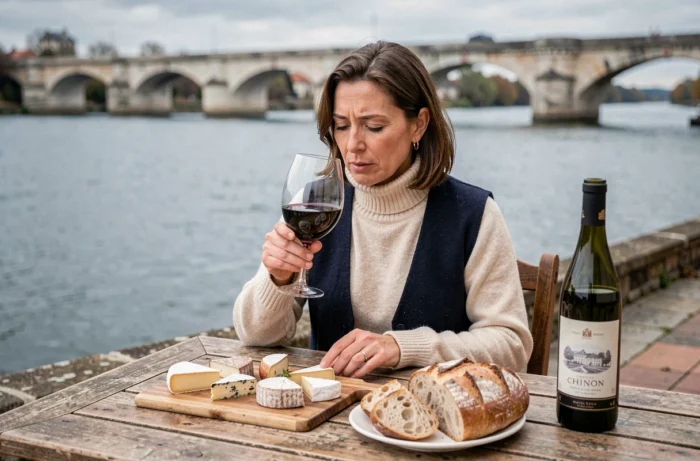
A young Chinon is best enjoyed fresh, around 14-15 °C, which surprises enthusiasts used to serving reds at room temperature. The freshness of Loire Cabernet Franc expresses itself better at a controlled temperature.
- The mentions “dry,” “semi-dry,” or “sweet” on Vouvray and Montlouis indicate the level of residual sugar, a crucial detail for food pairing.
- The mention “old vines” is not regulated but generally signals plots over 40 years old, with lower yields and higher concentration.
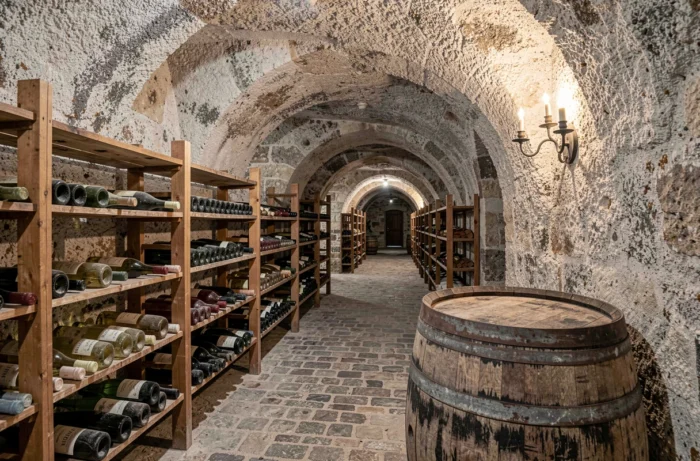
- The troglodyte cellars of Saumur and Touraine offer natural aging conditions (constant temperature, stable humidity) that influence the style of the wines aged on-site.
The Loire vineyard remains one of the few in France where the diversity of styles coexists under the same appellation: dry, sparkling, sweet, and red under the same name. This particularity complicates reading for the novice, but it precisely constitutes the richness of the region. The ongoing climatic and regulatory changes add a layer of complexity, and future vintages will reflect a vineyard in full adaptation.