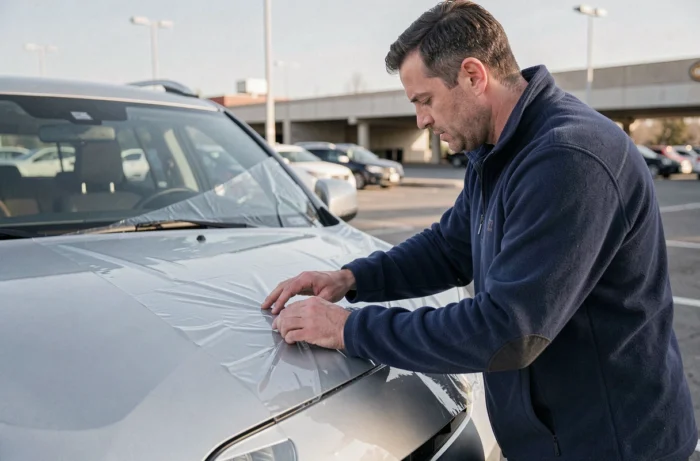
Protecting your vehicle is no longer limited to the warning triangle stored in the trunk. With new European regulatory requirements, the rising cost of claims, and the variety of body protection solutions, the choice of equipment deserves a more technical reading than the usual checklist. This article compares the main categories of car protection and equipment based on their durability, cost, and actual coverage level.
Driver Attention Monitoring Camera: What the EU Regulation Changes in July 2026
Since July 7, 2026, all new passenger and light commercial vehicles registered in the European Union come standard with three devices that were not present in previous models.
- An ADDW (Advanced Driver Distraction Warning) system relying on a dashboard camera continuously monitoring the driver’s attention, capable of triggering an audible and visual alert in case of prolonged distraction.
- An expanded automatic emergency braking (AEB) system, now designed to detect pedestrians and cyclists, not just other vehicles.
- A redesigned front end to better absorb impacts with vulnerable road users, which modifies the geometry of bumpers and hoods on recent models.
This regulatory evolution renders several safety equipment comparisons obsolete, still focused on the yellow vest and breathalyzer. On a new vehicle purchased after this date, the onboard active protection far exceeds what the paid options offered a few years ago. Specialized distributors like Car System integrate these developments into their catalog of compatible parts and accessories.
For owners of older vehicles, the question arises differently: these systems are not retrofittable. Protection then relies on complementary equipment, chosen according to the actual use of the vehicle.
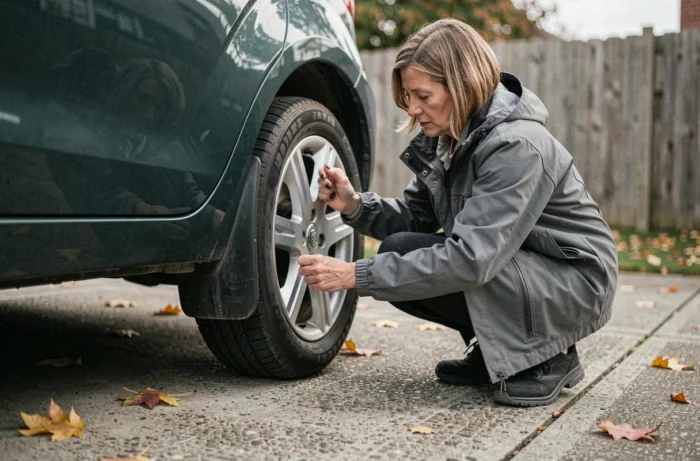
Bodywork and Paint Protection: Comparative Table of Common Solutions
The bodywork undergoes constant assaults: UV rays, road salt, bird droppings, tree resin, wash micro-scratches. Several families of products exist, but their durability and application methods differ significantly.
| Type of Protection | Average Durability | Application | UV Protection Level |
|---|---|---|---|
| Natural Wax (Carnauba) | Several weeks | Manual, frequent renewal | Low |
| Synthetic Sealant | Several months | Manual or machine | Medium |
| Ceramic Coating | Several years depending on the product | Professional recommended | High |
| Protection Film (PPF) | Several years | Professional installation required | Very high (physical barrier) |
Carnauba wax offers a valued aesthetic finish, but its durability does not exceed a few weeks under real conditions. The synthetic sealant is a reasonable compromise for a vehicle parked outdoors with regular maintenance.
The ceramic coating provides long-lasting protection against UV rays, which are the primary cause of varnish dulling. However, it does not protect against gravel impacts. Only the PPF film provides a physical barrier against projections and micro-shocks, but its installation cost often limits it to exposed areas (hood, bumper, side skirts).
Which Criteria to Prioritize Based on Parking
A vehicle parked consistently outdoors is subjected to continuous UV exposure. Rubber seals, headlight plastics, and interior fabrics degrade faster. In this case, the combination of ceramic coating and protective cover remains the most effective in terms of cost-durability ratio.
For a vehicle parked in a basement or garage, the synthetic sealant is often sufficient. The investment in a complete PPF is mainly justified for models with high residual value or fragile paints (soft varnishes on certain German manufacturers).
Automotive Parts Theft: Rising Average Claim Costs
Insurers are noticing a clear trend: while the overall frequency of claims (theft, glass breakage, damage) is decreasing, the average cost of theft claims is increasing. The targeted parts (headlights, rims, mirrors) are resold through parallel channels, and their replacement with original parts significantly impacts the bill.
LED or laser technology headlights, whose unit price far exceeds that of older halogen generations, partly explain this inflation. French models are among the most targeted according to several analyses published in 2026.
Concrete Anti-Theft Equipment to Evaluate
Physical protection remains the primary lever. The most common devices fall into three categories:
- Mechanical steering wheel or pedal lock: visual deterrent, moderate cost. Effective against opportunistic theft, less so against organized theft.
- Window etching and part marking: reduces the risk of resale of stolen parts and facilitates identification in case of recovery.
- Discreet GPS tracker: allows real-time location but requires a subscription. Particularly useful for vehicles parked in high-risk areas.
None of these devices guarantees total protection. Their value lies in their cumulative effect: a vehicle equipped with a mechanical lock, etched windows, and a tracker represents a significantly less attractive target.
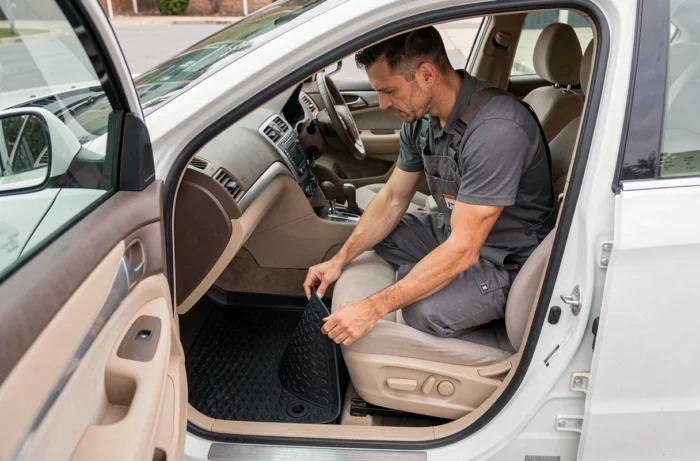
Windows and Windshields: Visibility and Thermal Comfort on a Daily Basis
Factory-tinted windows on recent models filter some UV rays and heat, but their effectiveness varies by manufacturer. Aftermarket solar films can go further, with measurable thermal rejection that reduces cabin temperature in summer.
Be cautious of regulations: in France, the front side windows must maintain a minimum light transmission of 70%. Therefore, the solar film is legally applicable only to the rear windows and the rear windshield.
For the windshield, a hydrophobic treatment improves visibility in the rain and reduces wiper wear. This type of treatment, often overlooked, is easily renewed and significantly extends the lifespan of the wiper blade.
The choice between these different solutions depends on a simple trade-off: frequency of use, parking conditions, and annual maintenance budget. The most durable protections are not always the most relevant for a low-mileage vehicle parked indoors. Conversely, a vehicle constantly exposed to the elements and parked on the street deserves targeted investment in the bodywork, windows, and anti-theft security.