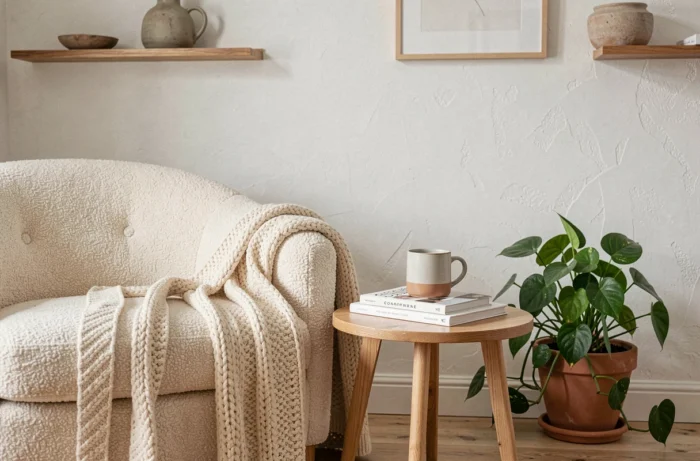
Transforming an interior into a cocoon is no longer just about piling blankets on a sofa. For a few seasons now, the cocooning trend has absorbed influences from Japanese design, biophilic design, and a more tactile minimalism. Compact living spaces, where the living room also serves as an office and sometimes a dining area, push this logic even further: every square meter must be able to change function without sacrificing comfort or aesthetics.
Chameleon Rooms: The Multifunctional Living Room as the Base of the Cocoon
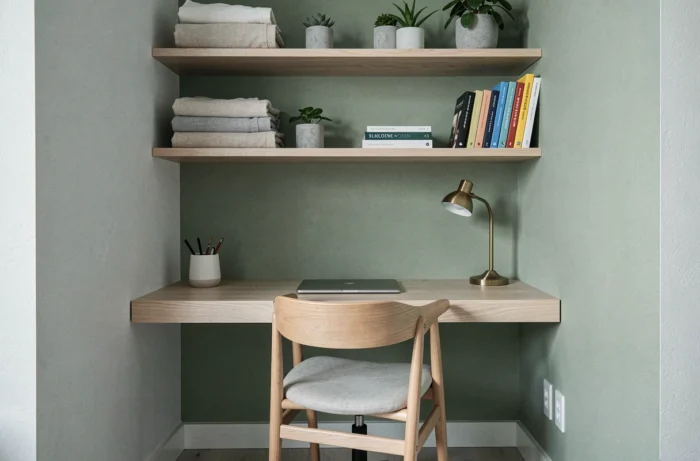
Interior architecture professionals now refer to chameleon rooms to describe these spaces that shift from one function to another throughout the day. A living room that transforms into an office in the morning and then into a dining room in the evening requires modular furniture and storage solutions that are discreet enough not to disrupt the enveloping atmosphere.
The tipping point is lighting. A single ceiling light is not enough: it is necessary to layer adaptable light sources (adjustable desk lamp, dimmable string lights, warm wall sconces) to transition from a focused work atmosphere to a relaxing ambiance without altering the furniture arrangement.
Field feedback varies on the usefulness of smart bulbs compared to simple dimmers, but the principle remains the same: modular lighting transforms a rigid space into an adaptable cocoon.
On this topic, home advice on Oka Mag explores several concrete ideas for rethinking the layout of an interior without undertaking major renovations.
Japandi Style and Biophilic Design: Cocooning Without Decorative Overload
The content dominating search results remains deeply rooted in classic Scandinavian coziness, with its off-white tones and textile accumulations. Recent trends show a shift towards a different register: a warm minimalism that focuses on raw materials rather than the quantity of decorative objects.
Japandi (a blend of Japanese and Scandinavian) combines clean lines with tactile textures. Unvarnished solid wood, artisanal ceramics, raw linen: surfaces retain their imperfections, creating a sense of warmth without visually cluttering the room.
Earthy Palette and Integrated Vegetation
The color palette associated with this approach revolves around terracotta, ochres, olive greens, and sandy beiges. These earthy tones are gradually replacing pearl gray and pristine white that dominated cocooning interiors a few years ago.
Biophilic design takes the logic further by integrating plants as a structural element of decoration, not simply as an accessory placed on a shelf. A stabilized moss wall in a hallway, a low planter serving as a divider between the living area and the office space, hanging plants above a reading nook: vegetation becomes an element of interior architecture, not a cosmetic addition.
- Solid wood, natural stone, and ceramics bring warmth without overcrowding the space, provided the palette is limited to three dominant materials per room.
- Textiles remain present but change register: washed linen, textured cotton, and boucle wool replace synthetic furs and heavy velvets.
- The integration of live or stabilized plants enhances the feeling of enclosure while serving as a visual separator in small spaces.
Energy Constraints and Material Choices: What Regulations Change for Decor
Decor articles rarely discuss regulatory constraints. Recent thermal standards change the game for those renovating or designing an interior. Enhanced insulation mandated by the latest regulations reduces heat loss, which has a direct effect on the comfort felt in a room, even without supplementary heating.
This better insulation prompts some interior architects to rethink their approach to wall coverings. A well-insulated wall no longer needs a thick drape to feel warm to the touch. As a result, textured wallpapers (stucco effect, plant fiber, matte non-woven) gain ground against heavy curtains and thick tapestries that served as much for visual insulation as for decoration.
Low Carbon Materials and Sustainable Decoration
The rise of reuse in decoration aligns with the cocooning logic through an unexpected path. A vintage solid wood piece, an artisanal ceramic bought second-hand, or a vintage brass light fixture provide exactly the type of patina and imperfection that warm minimalism seeks, while reducing the carbon footprint of the design.
The available data does not allow for precise quantification of the environmental impact of a “sustainable cocooning” interior compared to a classic design. However, the principle of limiting the number of decorative pieces to prioritize durable and repairable objects naturally aligns with the clean aesthetic of japandi.
Cocooning Decoration in the Kitchen and Bedroom: Adapting the Approach Room by Room
The living room monopolizes attention in most cocooning decor guides. The kitchen and bedroom deserve a specific approach, as their usage constraints differ radically.
In the kitchen, functionality takes precedence. Cocooning here translates into material choices (oiled wood countertop, artisanal zellige backsplash, aged brass handles) rather than textile additions that are ill-suited to grease splashes and humidity. A cocooning kitchen relies on the warmth of materials, not on the accumulation of accessories.
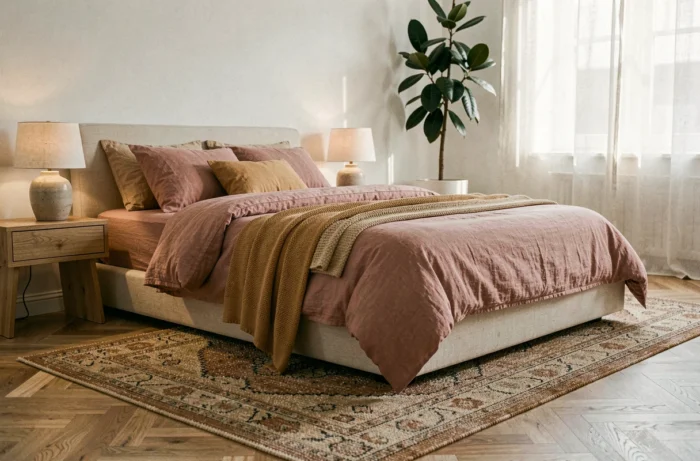
The bedroom, on the other hand, tolerates and calls for more textiles. Cocooning wallpaper behind the headboard is a simple intervention that transforms the atmosphere of a room without major renovations. Organic patterns (stylized foliage, waves, mineral textures) integrate better into an earthy palette than strict geometric patterns.
- Kitchen: prioritize natural materials on work surfaces and limit textiles to linen dish towels and light curtains.
- Bedroom: layer textiles (textured cotton duvet, wool throw, linen cushions) and treat the headboard as a focal point.
- Entryway and hallway: warm lighting at the threshold sets the cocooning tone even before entering the living room.
The common thread remains the same from one room to another: raw materials, a coherent palette, and layered lighting. The difference lies in the balance between textiles and hard surfaces, which directly depends on the daily use of each space.